The Brain Drain in Municipal Government: How AI Can Help Bridge the Gap
- Sep 16, 2025
- 2 min read
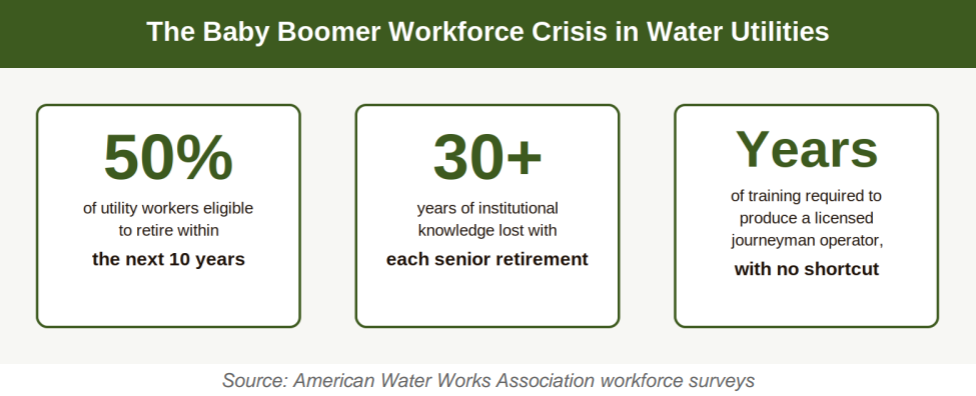
Municipal governments across the country are facing a growing challenge: a wave of retirements among baby boomers and early Gen X employees. For decades, these individuals have been the backbone of public works, utilities, and city management. They carry with them not only years of experience, but also “tribal knowledge”, the undocumented, hard-earned wisdom about how things really work within a city.

The problem is that much of this knowledge isn’t written down. It exists only in the heads of those who are about to leave the workforce. Once they walk out the door, their insights, tips, and problem-solving methods go with them. At the same time, municipal governments are struggling to recruit replacements. Compared to private-sector opportunities, government jobs are often seen as less attractive, making it difficult to fill the pipeline of new talent.
So what happens when decades of institutional memory disappear while fewer qualified people are waiting to step in? The risk is operational breakdowns, inefficiency, and slower service to the communities that depend on these systems.
How AI Can Help
While no single solution will solve the staffing and knowledge gap, artificial intelligence offers promising ways to bridge it:
AI Knowledge Capture & Mentorship Cities can create digital mentors by capturing the expertise of outgoing staff and training AI systems on that knowledge. Imagine a water treatment operator about to retire after 30 years. An AI mentor bot can be built from their notes, processes, and even recorded Q&A sessions, making their wisdom accessible to the next generation of employees long after retirement.
AI Customer Service Bots Municipal employees are often bogged down answering the same questions from residents day after day—questions about water bills, trash pickup, or permitting. AI-powered customer service bots, available by phone or chat, can handle these routine inquiries. This frees up staff time while improving resident satisfaction with fast, consistent answers.
AI-Enhanced O&M Manuals and SOPs Traditional operations and maintenance (O&M) manuals are lengthy, static documents that can be hard for new employees to navigate. By layering AI onto these resources, cities can transform them into dynamic, interactive tools. Instead of flipping through binders, employees can ask questions and receive instant, precise guidance. This makes operations more uniform, predictable, and resilient.
Preparing for the Future
The retirement wave in municipal government is not a temporary issue—it’s an ongoing trend that will reshape the workforce over the next decade. Cities that act now to capture knowledge, support employees with AI tools, and modernize resident services will be better equipped to weather the transition.
At LSPS Solutions, we work directly with municipal governments to implement AI solutions like knowledge-capturing mentor bots, resident service bots, and AI-driven O&M manuals. These tools are already helping cities operate more efficiently and ensure continuity as experienced staff retire.
The brain drain is real—but with the right mix of people and technology, municipalities can retain wisdom, attract new talent, and continue serving their communities with excellence.