
Are You Paying to Treat Rainwater? LSPS Solutions Introduces Advanced Wastewater Flow Monitoring
New wastewater monitoring technology helps Texas utilities identify inflow and infiltration, reduce unnecessary treatment costs, and make smarter sewer infrastructure investment decisions.
Every gallon of wastewater entering a treatment plant costs money to pump, process, and treat.
But what happens when a significant portion of that water isn't actually wastewater?
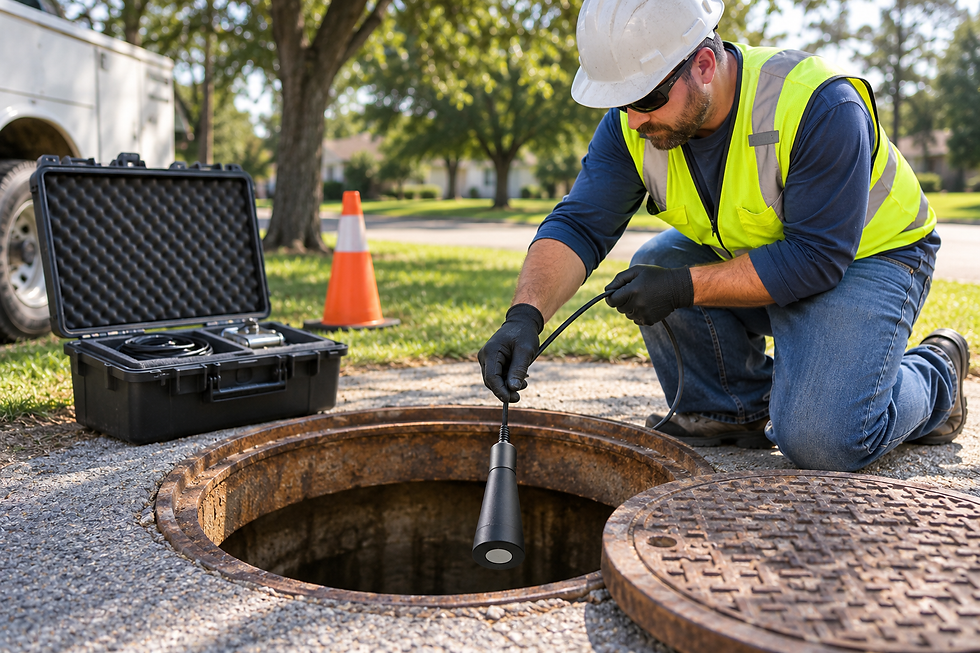
For many municipal and rural wastewater utilities, rainwater and groundwater entering sewer collection systems represent a hidden and potentially expensive problem.
Cracked pipes, deteriorating joints, faulty service laterals, and leaking manholes can allow unwanted water to enter sanitary sewer systems. Once inside, that water travels through the collection network and must be handled by pumping stations and treatment facilities, just like wastewater from homes and businesses.
The result can be higher operating costs, increased infrastructure wear, and unnecessary demand on treatment capacity.
The challenge is that many utilities know they have an inflow and infiltration problem but don't know exactly where the water is entering their system.
To help Texas utilities address this challenge, LSPS Solutions has expanded its field services capabilities with the addition of 14 Eastech iTracker wastewater monitoring sensors, supported by the company's iTracking analytical software.
This investment allows our team to conduct targeted, advanced wastewater flow monitoring studies, identify areas experiencing excessive inflow and infiltration, and help utilities direct maintenance and rehabilitation resources where they can make the greatest difference.
The Hidden Cost of Treating Water That Doesn't Belong in Your Sewer System
Sanitary sewer systems are designed to collect and transport wastewater from homes, businesses, and other connected facilities.
However, many collection systems also receive significant amounts of unwanted water through a process known as inflow and infiltration (I&I).
Although the terms are often used together, they describe two different ways water enters the sewer system.
Inflow occurs when stormwater enters the sanitary sewer system directly through sources such as improper connections, defective manhole covers, or other openings that allow surface water into the collection network.
Infiltration occurs when groundwater enters through cracks, deteriorating pipe joints, faulty service laterals, or other defects in underground infrastructure.
Both create the same fundamental problem: additional water enters the collection system without representing actual wastewater demand.
And that additional water isn't free to handle.
Every unnecessary gallon can contribute to:
Higher electricity costs: Lift stations must pump additional volumes of water through the collection system.
Increased equipment wear: Pumps and other mechanical equipment may operate more frequently or for longer periods.
Higher treatment costs: Wastewater treatment facilities must process water that should never have entered the sanitary sewer system.
Reduced available capacity: Excessive I&I consumes collection and treatment capacity that could otherwise support community growth.
Greater overflow risks: During heavy rainfall, additional flows can overwhelm collection system infrastructure and contribute to sanitary sewer overflows.
For smaller utilities operating with limited budgets, these additional costs can place significant pressure on long-term financial sustainability.
The problem isn't just that unwanted water enters the system. It's that utilities may spend years paying to transport and treat it without knowing where it comes from.
Why Finding Inflow and Infiltration Can Be So Difficult
Identifying I&I is not always straightforward.
A wastewater utility may notice that flows at its treatment plant increase dramatically during or after rainfall.
That observation strongly suggests unwanted water is entering the collection system.
But it doesn't reveal which pipes, manholes, or service connections are responsible.
In a collection network containing miles of underground infrastructure, the potential sources can be numerous.
Without reliable monitoring data, utilities may resort to inspecting or rehabilitating large portions of their sewer systems without knowing which areas contribute most significantly to the problem.
This can result in substantial expenditures on infrastructure that may not be responsible for the largest losses.
Traditional wastewater flow monitoring studies can help narrow the search, but they may also require significant equipment, time, and financial resources.
For smaller municipal and rural wastewater utilities, these costs can make comprehensive investigations difficult to justify.
That's where newer monitoring technology offers an alternative.
Introducing iTracker Advanced Wastewater Flow Monitoring
LSPS Solutions has invested in two Eastech iTracker TracPac 7 kits, providing a total of 14 wastewater monitoring sensors.
These compact, battery-powered devices are designed to monitor wastewater levels continuously within sewer collection systems.
Each sensor can be installed at a strategically selected manhole, where it collects information about changing wastewater levels over time.
Unlike traditional monitoring methods that may require more extensive equipment installations, iTracker sensors are lightweight and can be installed without personnel entering the confined space of a manhole.
This makes deployment faster and reduces certain safety risks associated with sewer inspection activities.
Once installed, the sensors continuously collect monitoring data and transmit information wirelessly for analysis.
Using Eastech's iTracking software, LSPS can evaluate system behavior before, during, and after rainfall events.
This helps identify where wastewater levels and estimated flows increase significantly when it rains, providing important clues about where unwanted water may be entering the collection system.
Rather than relying on assumptions about which pipes might be leaking, utilities can begin making decisions based on actual monitoring results.
Finding the Problem One Sewer Segment at a Time
One of the most valuable features of the iTracker system is its ability to help utilities progressively narrow down the source of inflow and infiltration.
Instead of attempting to inspect an entire sewer collection system at once, LSPS can strategically deploy sensors at multiple manholes to divide a collection basin into smaller monitoring areas.
By comparing how wastewater levels and flows change during rainfall events, our team can identify which sections of the collection system experience the greatest increases.
Once a problematic section has been identified, the sensors can be repositioned farther upstream to investigate smaller portions of the network.
This process can continue until the likely source area is narrowed to a relatively short section of sewer line, potentially between two adjacent manholes.
Consider a utility experiencing substantial increases in wastewater flow every time it rains.
Without targeted monitoring, the utility may know only that excess water is reaching its treatment plant.
With strategically placed iTracker sensors, LSPS can help determine which collection basin is contributing the additional water.
Further monitoring can then narrow the investigation to specific sewer segments.
At that point, additional inspection methods, such as smoke testing or CCTV camera inspection, can be used to identify the physical defects responsible.
The result is a more targeted approach to sewer rehabilitation, helping utilities focus their resources on the areas most likely to deliver meaningful improvements.
Real-World Results: Finding I&I Across 22 Miles of Sewer
The potential of this technology is demonstrated by a published Eastech case study involving Jefferson County, Alabama.
In that project, 14 iTracker sensors were used to evaluate approximately 22 miles of sewer infrastructure.
The monitoring process identified significant inflow and infiltration associated with faulty service laterals within a section of the collection system.
Through strategic sensor placement and progressive investigation, the problem was narrowed to an area between two adjacent manholes.
The study was conducted over approximately three and a half months, but the combined field deployment and data analysis time totaled approximately 48 hours.
This example illustrates how targeted monitoring can help utilities investigate extensive sewer networks without requiring continuous field activity across the entire system.
Notably, LSPS Solutions now owns the same number of iTracker sensors used in that project, allowing our team to apply a similar monitoring approach for Texas wastewater utilities.
While every collection system presents different challenges, the underlying principle remains the same: better information helps utilities focus their investigations and rehabilitation efforts.
Identifying Potential Sewer Overflows Before They Happen
Inflow and infiltration are not simply financial concerns.
During heavy rainfall, unwanted water entering a sanitary sewer system can cause wastewater levels to rise rapidly.
If the collection network or pumping infrastructure cannot accommodate the increased volume, the system may experience surcharging, backups, or sanitary sewer overflows (SSOs).
These incidents can create environmental concerns, service disruptions, and potential regulatory consequences.
The iTracker system provides additional capabilities that can support overflow prevention efforts.
By continuously monitoring wastewater levels, the sensors can help identify unusual increases and conditions associated with surcharging.
The iTracking software can also provide level alerts when monitored conditions approach selected thresholds.
This gives utilities additional visibility into developing problems and may allow operators to respond before an overflow occurs.
Continuous monitoring also creates a record of how long elevated wastewater levels persist, providing useful information for evaluating system performance.
For utilities experiencing recurring wet-weather overflows or lift station capacity concerns, these insights can help identify where further investigation or infrastructure improvements may be necessary.
Although monitoring alone cannot prevent every overflow, it can provide information that supports more proactive collection system management.
Turning Underground Data into Something You Can Actually See
One of the challenges utility managers face is communicating complex infrastructure problems to city councils, utility boards, and other decision-makers.
Technical reports and spreadsheets contain valuable information, but they don't always make it easy to visualize what happens underground during a rainfall event.
Eastech's iTracking software addresses this challenge through a playback feature that converts monitoring information into an animated representation of system behavior.
For example, a four-hour rainfall event can be compressed into a short video showing how wastewater levels and flows change throughout the monitored collection system.
This makes it easier to demonstrate which areas experience the greatest increases and how conditions develop over time.
For utility managers presenting infrastructure needs to elected officials or governing boards, this type of visualization can be particularly useful.
Rather than simply explaining that a sewer basin experiences excessive I&I, managers can show how the system responds when it rains.
That can help decision-makers better understand why targeted repairs, additional inspections, or capital improvements may be necessary.
Better Data for Capital Improvement Planning and Funding Applications
For many Texas wastewater utilities, the need for sewer rehabilitation exceeds available funding.
Aging infrastructure, recurring maintenance problems, and limited capital budgets make it essential to prioritize investments carefully.
Without reliable monitoring data, deciding which sewer lines to rehabilitate can be difficult.
A utility might invest significant resources replacing an aging sewer main only to discover that much of its unwanted water was entering through defective service laterals elsewhere in the system.
Targeted wastewater monitoring helps reduce this uncertainty.
By identifying collection areas with the greatest wet-weather flow increases, utilities can develop more informed maintenance and rehabilitation strategies.
The resulting data can help:
Prioritize infrastructure improvements. Focus investigations and rehabilitation efforts on sewer segments showing the greatest potential I&I contribution.
Reduce unnecessary expenditures. Avoid committing major rehabilitation funding without first identifying likely problem areas.
Support capital improvement planning. Use documented system performance to help justify proposed projects and establish priorities.
Strengthen funding applications. Provide supporting technical information for applicable grant and state revolving fund requests.
Evaluate completed repairs. Conduct follow-up monitoring to determine whether rehabilitation efforts successfully reduced unwanted flows.
This last point is particularly important.
Identifying and repairing a suspected problem is only part of the process. Utilities also benefit from knowing whether the investment actually improved system performance.
Follow-up monitoring can help answer that question.
Combining Flow Monitoring with CCTV Inspection and Smoke Testing
At LSPS Solutions, we believe utility infrastructure challenges are best addressed through coordinated services rather than isolated activities.
Our new iTracker monitoring capability complements several field services we already provide.
For example, a wastewater utility experiencing excessive wet-weather flows could begin with a targeted iTracker monitoring study to identify the collection areas contributing the greatest increases.
Once those areas are identified, LSPS can use additional inspection methods to investigate the underlying causes.
Sanitary sewer smoke testing can help identify improper connections, defective service laterals, and other openings that allow unwanted water into the collection system.
CCTV sewer inspection, using our Opticam XL camera system, can provide direct visual evidence of cracked pipes, damaged joints, root intrusion, and other defects.
Together, these services create a more complete investigative process:
Monitor: Use iTracker sensors to identify collection areas experiencing excessive wet-weather flow increases.
Investigate: Apply smoke testing and CCTV inspection to locate potential sources and physical defects.
Prioritize: Use the findings to determine which repairs or rehabilitation projects should receive attention first.
Verify: Conduct follow-up monitoring to evaluate whether completed improvements reduced I&I.
The information collected can also be incorporated into a utility's Geographic Information System (GIS) and asset management records.
For utilities using platforms such as Diamond Maps, monitoring locations, identified problem areas, and planned repairs can become part of a more complete infrastructure inventory.
This helps ensure that the findings from a monitoring study continue providing value long after the initial investigation is complete.
Bringing Advanced Wastewater Monitoring to Small and Rural Texas Utilities
Many smaller wastewater utilities recognize that inflow and infiltration contribute to their operating costs but lack the equipment or internal resources to investigate the problem thoroughly.
LSPS Solutions helps bridge that gap.
Our investment in 14 iTracker sensors allows us to provide targeted wastewater monitoring services without requiring individual utilities to purchase and maintain specialized equipment themselves.
The technology's compact design, relatively quick deployment, and ability to progressively narrow problem areas make it particularly well suited for utilities seeking practical, cost-conscious alternatives to extensive traditional flow studies.
This new capability joins our expanding portfolio of specialized field services, including:
CCTV sewer inspection and defect locating
Sanitary sewer smoke testing
Continuous water pressure monitoring
Water meter accuracy testing
Valve maintenance
Aerial drone inspections
By combining these capabilities with our experience in utility operations, asset management, compliance support, and infrastructure planning, LSPS helps municipalities, rural water systems, and utility districts make more informed decisions.
Our goal isn't simply to collect more data.
It's to help utilities turn that data into practical improvements that reduce unnecessary costs, protect infrastructure, and strengthen long-term system reliability.
Are You Paying to Treat Rainwater?
If your wastewater flows increase significantly every time it rains, unwanted water may be entering your collection system.
The question is: Where is it coming from?
Without reliable monitoring data, your utility could spend years treating unnecessary water or investing in repairs that fail to address the underlying problem.
With our new fleet of Eastech iTracker wastewater monitoring sensors, LSPS Solutions can help your utility identify potential I&I problem areas, prioritize investigations, and make smarter infrastructure investment decisions.
Whether you're dealing with recurring wet-weather flow increases, lift station capacity concerns, sanitary sewer overflows, or preparing for a sewer rehabilitation project, our team is ready to help.
Don't keep paying to treat water that shouldn't be in your sewer system.
Contact LSPS Solutions today to discuss a wastewater flow monitoring study, request a quote, or learn how our expanded field services can support your utility.
LSPS Solutions — Practical Expertise. Reliable Data. Stronger Utilities.


